


Frequently Asked Questions
about Emotional Eating & Childhood Trauma
What is emotional eating?
Emotional eating refers to using food to cope with hard feelings rather than to satisfy physical hunger. People may eat in response to sadness, anxiety, loneliness, fear, disappointment, or any stressful or overwhelming feeling.
Even positive emotions may trigger emotional eating, especially if you experienced childhood trauma.
For example, you may feel happy about a pay raise and then turn to food, eating more than is comfortable for your body. This isn’t necessarily about eating as a form of celebration. While not obvious on the surface, for some people, even uplifting emotions can feel unsettling if deep inside they don’t feel deserving of happiness.
What is the difference between emotional hunger and physical hunger?
Physical hunger generally develops gradually, can be satisfied with many different foods, and stops when your body feels physically satisfied.
Emotional hunger often comes on suddenly, there’s a craving for specific comfort-type foods, and may persist even after your body is physically satisfied.
There are times, however, when emotional hunger persists and is not necessarily sudden. Chronic depression, anxiety, or grief can leave one feeling emotionally hungry more often than not throughout the day. Emotional hunger then doesn’t necessarily come on suddenly but is an ongoing response to deep emotional pain. Food then feels like the only way to numb that pain.
(Please note that sometimes physical hunger comes on suddenly due to blood sugar instability or other medical conditions and is not due to emotional eating. Talk with your health care provider to see if this applies to you.)
What’s the difference between emotional eating and stress eating?
Semantics aside, many people may turn to food when stressed and it’s not because they struggle with emotional eating. Here are three main differences between chronic emotional eating and episodic stress-eating:
- Chronic emotional eating is when food is your primary way of coping with hard feelings and you have few or no other coping strategies.
Episodic stress eating may happen occasionally but you have effective stress management strategies that are your primary ways of coping. - Chronic emotional eating episodes often result in feeling guilty and ashamed.
Episodic stress eating generally does not trigger self-criticism. - Chronic emotional eating often results in eating more than is comfortable for your body.
With episodic stress eating, you may be more attuned to your body’s needs and stop eating before feeling physically uncomfortable. - Chronic emotional eating ends up with you shifting your attention away from what triggered you in the first place and focusing instead on the shame and guilt for eating. This keeps you from adequately addressing the issue at hand.
With episodic stress eating, you remain focused on what triggered you so you can appropriately address that issue.
How does childhood trauma lead to emotional eating?
Childhood trauma can affect the child’s developing nervous system, stress response, and the acquisition of healthy coping mechanisms.
Traumatized and stressed children may discover that food is the only source of comfort when other means of soothing aren’t available or effective. The child then learns to use food and eating to regulate the overwhelming emotions, memories, and unsettling physiological trauma-based sensations held in the body.
Unlike other emotion-numbing substances like alcohol or cigarettes, food is often easily accessible for children (unless they and their families struggle with food insecurity). They then experience how food, especially high-fat, sweet, and salty foods, numbs their pain and calms the stress in their body. This behavior may then become a lifelong habit.
What types of childhood experiences contribute to emotional eating patterns?
Any adverse, traumatic, or abusive experience can lead to emotional eating. For example:
- Physical, emotional, or sexual abuse. This includes bullying at home, school, community.
- Physical, emotional, or medical/dental neglect. This includes emotional invalidation and role reversal/parentification ( a parent looking to the child for comfort and support).
- Witnessing domestic violence, a traumatic accident, or a death.
- Having a parent with an addiction or mental illness.
- Death of a parent, sibling, other significant family member, or any loved one.
- Divorce or other forms of parental separation, such as incarceration or abandonment.
- Poverty, community violence, and food insecurity.
How do I know if my emotional eating behaviors are trauma-related?
If you endured any of the above painful experiences in childhood and have not been in a process of psychotherapy to help you heal, chances are that your emotional eating behaviors may be trauma-related.
I say this because trauma is hard to heal on your own. Food has been your way to cope and that’s okay. You’re just trying to help yourself feel better. And we all need to feel better when we’re in pain. So be gentle with yourself. You’re doing the best you can.
Some signs of trauma-related emotional eating may include:
- Eating in response to specific triggers or memories where you feel intense anger, disappointment, sadness, or panic.
- Emotional reactions that are out of proportion to the situation.
- Feeling disconnected from your body while eating.
- Using food to feel safe or in control when feeling unsafe, scared, and helpless.
- Having shame or secrecy around eating.
- Noticing patterns around using food the way you did in childhood. For example, hiding food or making plans to binge eat.
Is trauma-related emotional eating different from other emotional eating?
Emotional or stress eating unrelated to trauma may happen occasionally based on typical life stressors, feel less intense, and may result in feeling little to no guilt or shame afterward.
Trauma-related emotional eating often involves more intense emotional triggers and responses, greater feelings of being out of control and ungrounded, and may be triggered by trauma reminders.
Trauma-based emotional eating can also involve eating to feel grounded and secure when experiencing dissociation, which is a psychological defense mechanism whereby you feel disconnected and separate from your body, surroundings, or yourself.
Why do I crave certain foods when triggered?
Some foods often become associated with comfort, control, or safety during childhood. For example, foods high in sugar, fat, and salt can temporarily alter brain chemistry, providing relief from distressing emotions and unsettling physiological sensations in the body.
Also, sometimes people crave foods that were once restricted, especially if they were put on diets as a child or teenager, and this helps to reduce feelings of emotional deprivation.
Can addressing the trauma help with emotional eating?
Yes, psychotherapy with a licensed, trauma-informed therapist can be very helpful. A therapist with whom you feel comfortable can help guide you, gently and at your own pace, to process traumatic experiences and memories and teach you skills to calm your nervous system and change trauma-based negative thinking.
Over time, therapy can help you feel triggered less frequently and with less intensity. It will also help you develop self-care strategies so that using food is no longer the only way you cope.
Certain therapeutic approaches, such as Eye Movement Desensitization Reprocessing (EMDR), Internal Family Systems (IFS), and somatic therapies can also help you process traumatic experiences and develop healthier coping strategies.
In addition to psychotherapy, working with a trauma-informed registered dietitian or nutritionist can offer additional guidance as you heal your relationship with food.
Please note that it’s important to work with qualified, licensed professionals who understand both trauma and the resulting emotional eating behaviors.
Will I be able to stop emotional eating?
Yes…and no. So please hear me out.
Psychotherapy can help you heal the root cause of why you feel triggered to emotionally eat. You’ll learn effective coping strategies to calm your nervous system, new ways of thinking about yourself to improve your confidence and self-worth, and practices to soothe the pain and trauma held in your body.
You’ll learn how to develop self-compassion and self-acceptance so that you stop beating yourself up for emotionally eating. And you’ll learn how to develop a more peaceful relationship with food and your body.
Psychotherapy can help you feel empowered and free.
And I want you to understand something:
As you use psychotherapy to heal from childhood trauma, over time, painful emotional reactions occur less frequently, feel less intense, and last for shorter periods of time.
For example, instead of feeling triggered with 90 to 100 percent frequency and intensity, you’ve learned grounding and self-soothing practices so that the frequency and intensity of feeling triggered moves down to 60, 40, or 30 percent.
And instead of turning to food 90 to 100 percent of the time, you turn to food 60, 40, or 30 percent of the time.
Healing emotional eating doesn’t necessarily mean that you’ll get to 0 percent of being triggered and stop emotionally eating completely.
And that’s okay.
At some point, you’ll get down to 10, 20, or 30 percent of frequency and intensity—and I promise that you can live successfully with that.
Lastly, and this is a key that I want you to remember:
Healing emotional eating isn’t about not emotionally eating. It’s about how you handle it when you do emotionally eat.
What that means is, as you develop self-compassion and self-acceptance, you’ll become better able to treat yourself with love and kindness after emotionally eating. You’ll accept that you used food to cope and let it go, just like people who emotionally eat when it’s unrelated to childhood trauma.
Self-compassion and self-acceptance not only help you heal emotional eating. It helps you heal from childhood trauma, too. So stay the course. You’ll get there.
Wishing you peace and happiness on your healing journey.
With love,
Diane
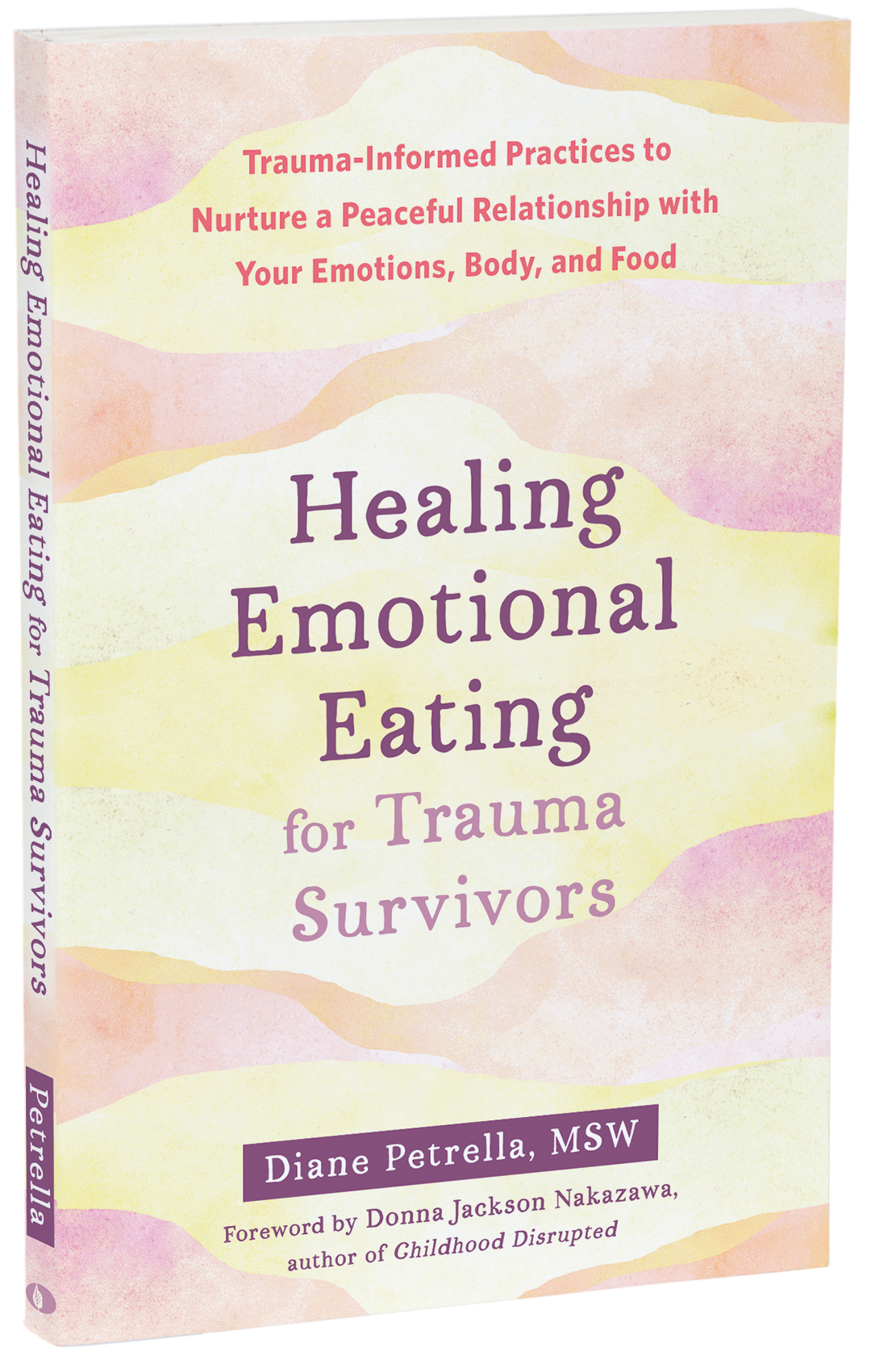
For more information about the connection between childhood trauma and emotional eating and to learn practices to help you heal, check out my book.
Healing Emotional Eating for Trauma Survivors: Trauma-Informed Practices to Nurture a Peaceful Relationship with your Emotions, Body, and Food.